

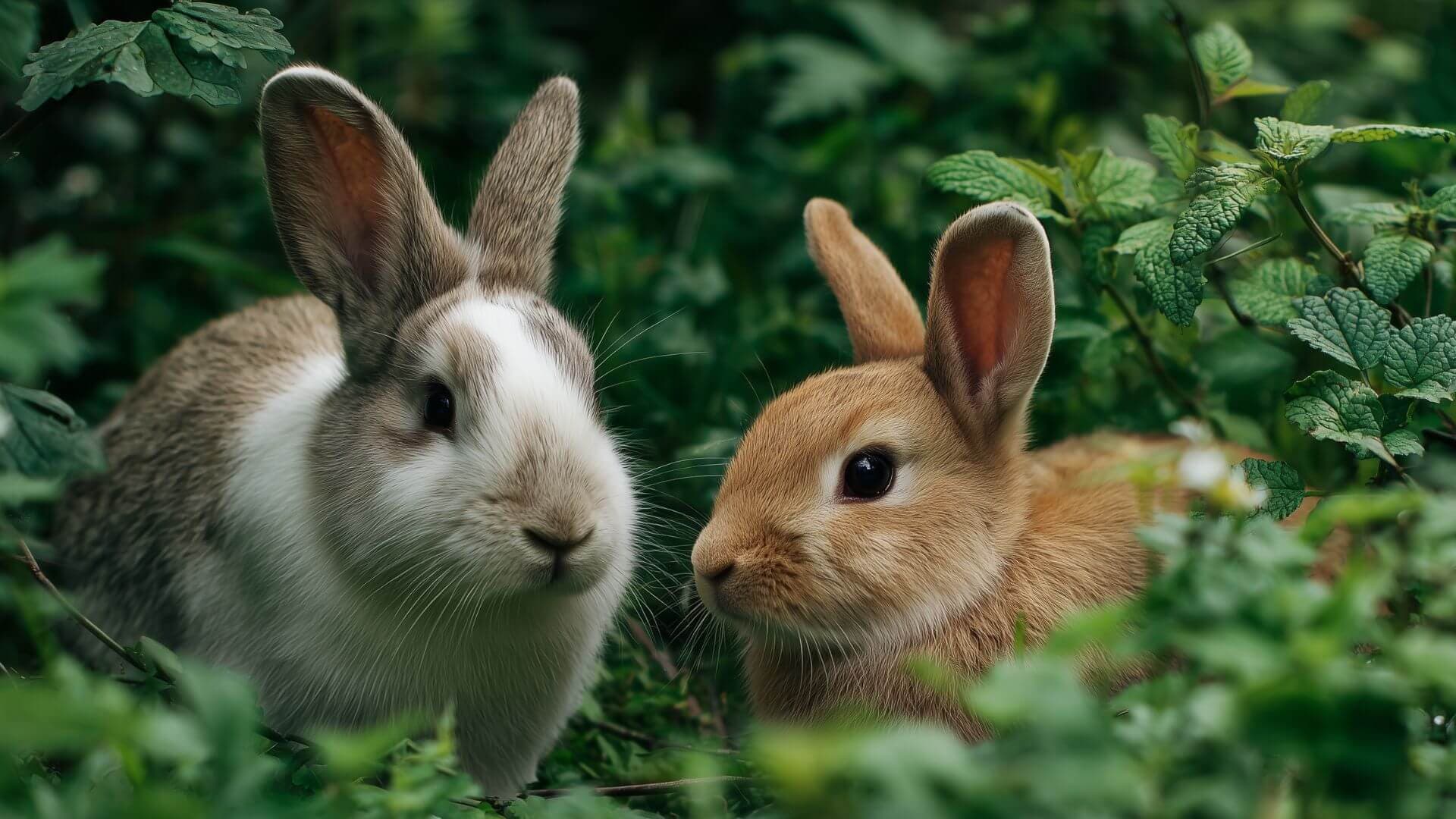
Responsible Rabbit Breeding 101: A Guide To Happy Bunnies
Learn all about responsible rabbit breeding. Follow best practices for care, breeding ethics, and ensuring healthy, well-socialized bunnies.

From profile to puppies - your rabbit breeding journey in 4 simple steps
Set up a detailed profile with photos, health records, and pedigree information
Browse verified breeding partners based on breed, location, and compatibility
Message owners directly to discuss breeding plans and health certifications
Meet safely, complete breeding agreements, and welcome healthy puppies
Set up a detailed profile with photos, health records, and pedigree information
Browse verified breeding partners based on breed, location, and compatibility
Message owners directly to discuss breeding plans and health certifications
Meet safely, complete breeding agreements, and welcome healthy puppies
Join thousands of responsible rabbit owners who trust us for quality breeding connections
Every breeder is verified, ensuring you connect with genuine, responsible pet owners.
Find breeding partners near you to make meetings convenient and stress-free.
Customize your search with detailed filters for breed, age, health status, and more.
Chat directly with pet owners to discuss all details before making any commitments.
Join thousands of responsible rabbit owners who've found quality breeding partners on Petmeetly.
Get Started NowConnect with verified rabbit owners in your area for safe and ethical breeding

Holland Lop

Dwarf Hotot

Rex

Dwarf Hotot

Holland Lop

Dutch

Dutch
Connect with verified stud rabbit owners and find the perfect buck to complement your doe. Browse health-tested studs from 45+ rabbit breeds.
A stud rabbit (buck) is an intact male used for breeding. Quality studs have excellent pedigrees, are free from genetic defects, meet breed standards, and have proven breeding records with healthy litters.
Access to diverse bloodlines improves genetic health. Professional stud owners provide health-tested bucks, breeding expertise, and often mentor new breeders through the process and ARBA registration.
Look for studs with complete pedigrees, ARBA registration, show records, proven offspring, and breeders who follow ethical practices and maintain excellent rabbitry standards.
A step-by-step guide to ethical rabbit breeding, from health testing to finding the perfect mate and caring for kits.
Before breeding your rabbit, ensure both doe and buck are in excellent health. Check for common issues that can be passed to offspring.
Small breeds: 5-6 months. Medium breeds: 6-7 months. Large/Giant breeds: 8-9 months. Never breed a doe for the first time after 12 months.
Select a mate that complements your rabbit's qualities and improves potential weaknesses. Study pedigrees and breed standards.
Always bring the doe to the buck's cage. Rabbits are territorial and does may attack bucks in their own space. Watch for fall-off to confirm successful mating.
Rabbits have induced ovulation. After successful mating, prepare for the 31-day gestation period with proper care and nest box setup.
Rabbit pregnancy lasts 31-33 days. Mark your calendar! Provide a nest box filled with hay 3-4 days before the due date. Does will pull fur to line the nest.
Responsible breeders ensure kits are fully weaned, handled daily for socialization, and placed with screened families.
Dwarf breeds: 2-4 kits. Medium breeds: 6-8 kits. Large breeds: 8-12 kits. First-time does may have smaller litters. Allow 6-8 weeks between litters for doe health.
Browse 5,000+ rabbits from 45+ breeds available for breeding partnerships. Find health-tested does and bucks from verified breeders.
Compact, floppy ears, friendly
Tiny, energetic, round head
Plush velvet coat, calm
Mane of fur, playful
Gentle giant, docile
Long wool, show quality
Classic markings, friendly
Dense plush coat, calm
All breeders undergo verification. Pedigrees and ARBA registrations are reviewed for authenticity.
Message breeders directly, arrange visits, and discuss breeding terms securely on our platform.
We promote responsible breeding practices and connect breeders committed to rabbit welfare.
Follow these essential steps for safe, ethical, and successful rabbit breeding
Screen for pasteurella & malocclusion
Breed at proper age & condition
Choose compatible genetics & type
Prepare nest boxes & find homes
Healthy parents produce healthy kits. Pasteurella and malocclusion are particularly important to screen for as they're common in rabbits and can be hereditary.
Timing is crucial for successful breeding. Does can conceive immediately after kindling, but spacing litters properly ensures healthier mothers and kits.
The right breeding partner combines excellent health, temperament, and genetics. Always bring the doe to the buck's cage to prevent territorial aggression.
Preparation is key to successful breeding. Have nest boxes ready by day 28, and ensure you have homes lined up for the expected kits.
Breed multiple does together to enable fostering between litters
Maintain detailed breeding records and pedigrees for all rabbits
Have buyers lined up before breeding to ensure homes for kits
of Ethical Breeding
Every breeding decision should prioritize the health, temperament, and welfare of rabbits above all else.
Based on 31-day average gestation period
Planning a breeding? Our free calculator helps you predict important dates in your rabbit's pregnancy journey with scientific accuracy. Simply enter the breeding date to get a complete kindle timeline.
Kindle Date Prediction
Precise calculation based on your breeding date
Nest Box Schedule
Know when to provide nest box (day 28)
Palpation Window
Best time to check for pregnancy (day 10-14)
Care Reminders
Important milestones and feeding adjustments
Professional Advice: This calculator provides estimates based on average gestation periods (28-32 days, average 31). Always monitor your doe closely as kindling approaches and consult with a rabbit-savvy veterinarian for professional advice.
Expert advice and insights on responsible rabbit breeding

Learn all about responsible rabbit breeding. Follow best practices for care, breeding ethics, and ensuring healthy, well-socialized bunnies.
Advanced features that protect and support every breeding partnership
ARBA pedigree and health record verification
End-to-end encryption for all communications
Following ARBA guidelines for ethical breeding
Peer reviews ensure rabbitry accountability
Dedicated team always available to help
Get help within 24 hours guaranteed
Discover breeding guides for different rabbit breeds and find the perfect match for your breeding program
Find answers to common questions about rabbit breeding
Essential health checks include screening for pasteurella, ear mites, fur mites, malocclusion (teeth problems), and proper body condition. Vet-certified health checks are recommended. Pedigree verification is important for purebred rabbits.
Small breeds can be bred at 5-6 months, medium breeds at 6-7 months, and large/giant breeds at 8-9 months. Does should not be bred past 4 years old for their first litter, and bucks can remain fertile until 5-6 years old.
Look for partners who provide health documentation, have ARBA registered pedigrees, follow breed standards, and are transparent about their breeding practices. Petmeetly verifies all breeder profiles to help you find trustworthy breeding partners.
Stud fees vary by breed and quality: $25-$50 for pet quality, $50-$150 for show quality, and $100-$300+ for grand champion lines. Some breeders prefer pick-of-litter arrangements instead of monetary fees.
A breeding contract should include: stud fee terms, health guarantees, pedigree requirements, responsibilities for veterinary care, what happens if no pregnancy occurs, pick-of-litter arrangements if applicable, and any co-ownership terms.
Connect with verified, health-tested breeding partners in your area. Start your responsible rabbit breeding journey today.